
What Another Season of This Actually Costs
Leave a gapped garage door alone through one more Arizona summer and you're not just losing a little comfort — you're paying for it twice: once in a garage that turns into an oven, and again in a living room that never quite cools down because the AC is fighting heat bleeding through the shared wall. National estimates put the added cooling cost from a poorly sealed, uninsulated garage door at roughly 10-20% higher energy use for the rooms next to it. In a market where summer highs regularly sit in the 100s, that's not a rounding error — it's real money every single billing cycle.
The Argument, Settled
One side of the debate: "It's just a garage, it doesn't matter if it's sealed." The other side: "It's attached to the house, so it matters a lot." The second person is right. An attached garage shares at least one wall — and often ductwork or a door — directly with conditioned living space. When that garage door leaks hot air in during the day, the garage itself can climb well past outdoor temperature, since it's a metal-and-concrete box with no airflow. That heat doesn't stay put. It radiates through the shared wall and sneaks in around the connecting door, making your AC run longer to hold the thermostat setting. At night, the same gaps let the day's heat keep radiating in even as outdoor temps finally drop.
Why This Is Worse in the Desert Specifically
- UV exposure bakes the seals. The rubber weatherstripping along the bottom and sides of the door hardens and cracks faster here than almost anywhere else, which opens new gaps even if the door was sealing fine a year or two ago.
- Monsoon dust finds every opening. Fine dust pushed by seasonal storms works into the same gaps that let air through, so you'll often see a dust line on the garage floor tracing exactly where the seal has failed.
- Extreme daytime-to-nighttime swings mean the door and frame expand and contract more than in milder climates, which loosens weatherstripping and can throw the door slightly out of alignment over time.
How to Check It Yourself
- Close the door and look for daylight. Walk the perimeter from inside the garage. Any strip of light at the bottom, sides, or top is a gap letting conditioned (or unconditioned) air pass freely.
- Feel for a draft. Run your hand along the bottom seal and side tracks on a windy day. A steady breeze means the seal isn't making contact.
- Check the bottom astragal. This is the rubber seal along the door's bottom edge — it's the first thing UV and ground heat wear out. Cracked, flattened, or torn rubber here is an easy, inexpensive fix.
- Look at the shared wall. If that wall is noticeably warmer to the touch than other interior walls on a hot afternoon, heat is transferring through — and a leaky door is usually part of the reason.
- Check the photo-eye sensors. Dust buildup from monsoon season can keep the door from closing fully and squarely, which leaves gaps even when the door looks shut.
The Fix: Cheap Patch vs. Real Solution
Replacing worn weatherstripping is a low-cost fix, but in this climate it's a recurring one — expect to redo it every season or two as UV breaks it down again. A longer-term option is an insulated garage door panel, which costs more upfront (national ranges typically run several hundred to a couple thousand dollars depending on size and material) but resists heat transfer far better and holds up longer against sun exposure. If your current door is a thin, non-insulated steel panel, that's often the bigger culprit than the weatherstripping alone.
When to Call Mesa Garage Door Pro
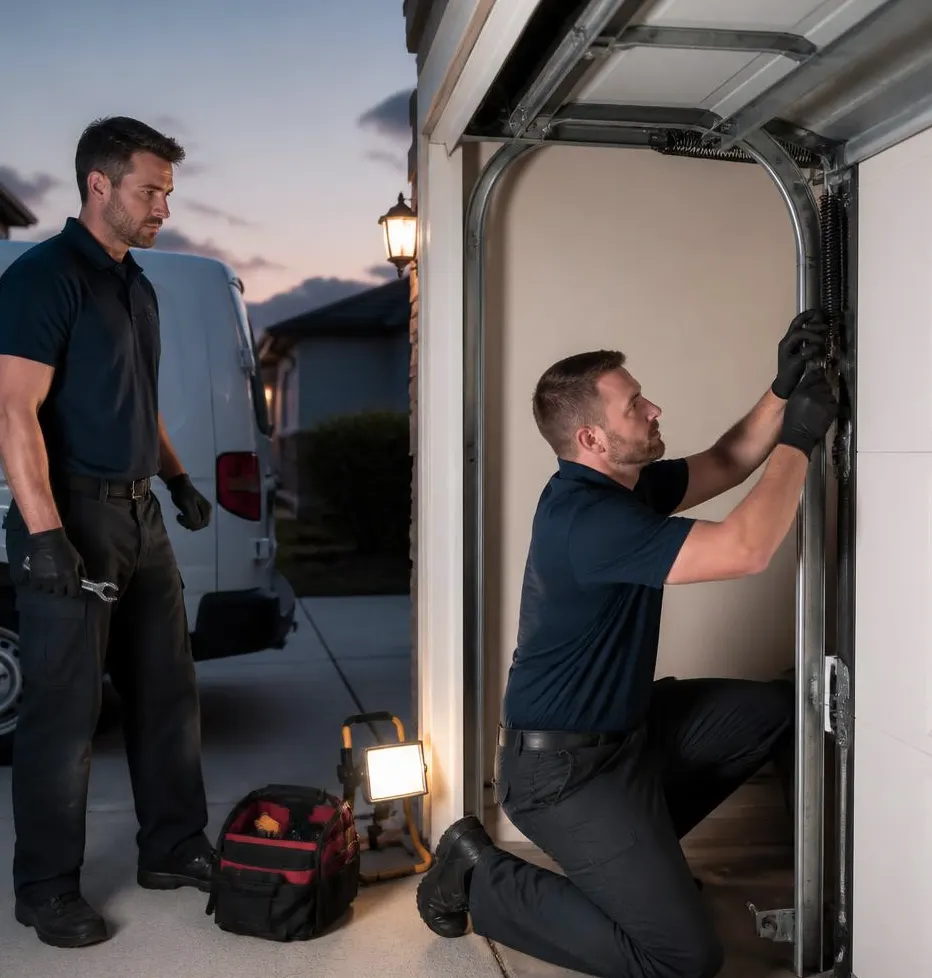
If the door won't seal evenly no matter how you adjust it, if panels are warped from heat, or if you're ready to stop patching and upgrade to an insulated door, that's our wheelhouse. We handle garage door maintenance and tune-ups to realign tracks and reseal gaps, and full garage door installation if an insulated replacement makes more sense for your home. Call Mesa Garage Door Pro and we'll find out exactly where your door is leaking and what it's worth fixing versus replacing.