
The Mistake Most Homeowners Make First
When people worry about their springs, the first thing they do is walk into the garage and look at them — checking for rust, gaps, or obvious damage. It's a tempting move because it feels thorough and it's free. The problem is that garage door springs rarely fail because they look bad. They fail from fatigue: thousands of open-and-close cycles that slowly stretch the steel past its working life. A spring can look clean and tightly wound the day before it lets go. So a visual-only check gives you false confidence. The real tells show up in how the door behaves, not just how the spring looks.
In Mesa, that fatigue clock runs faster than in milder climates. Extreme summer heat causes the metal to expand and the factory lubricant to thin out and cook off, while cool desert nights bring it back down — that daily expansion and contraction adds stress cycles on top of normal use. Monsoon dust works into the coils and can mask binding that's actually a spring problem, not a track problem. None of this means your springs are doomed, but it does mean the checklist below is worth running every few months, not just when something feels off.
The Walk-Through Checklist
1. Do the Balance Test
Close the door, disconnect the opener (pull the red release cord), and lift the door by hand to waist height. Let go. A properly balanced door stays put. If it drops on its own or shoots upward, the springs are no longer carrying their share of the door's weight — a sign of significant wear on one or both springs.
2. Watch the Opener Work
Operate the door with the opener and pay attention to the motor. If it strains, hesitates, or takes noticeably longer to lift the door than it used to, the opener is compensating for springs that have lost tension. This also shortens the opener's own lifespan, which matters in a climate that already pushes openers hard.
3. Listen for New Sounds
A loud bang, a popping noise, or a grinding sound during travel are different signals. A bang usually means a spring has already broken. Popping during normal operation can mean a coil is catching or a cable is slipping. Grinding often points to a spring rubbing against the shaft or bracket from uneven wear.
4. Check for a Visible Gap in a Torsion Spring
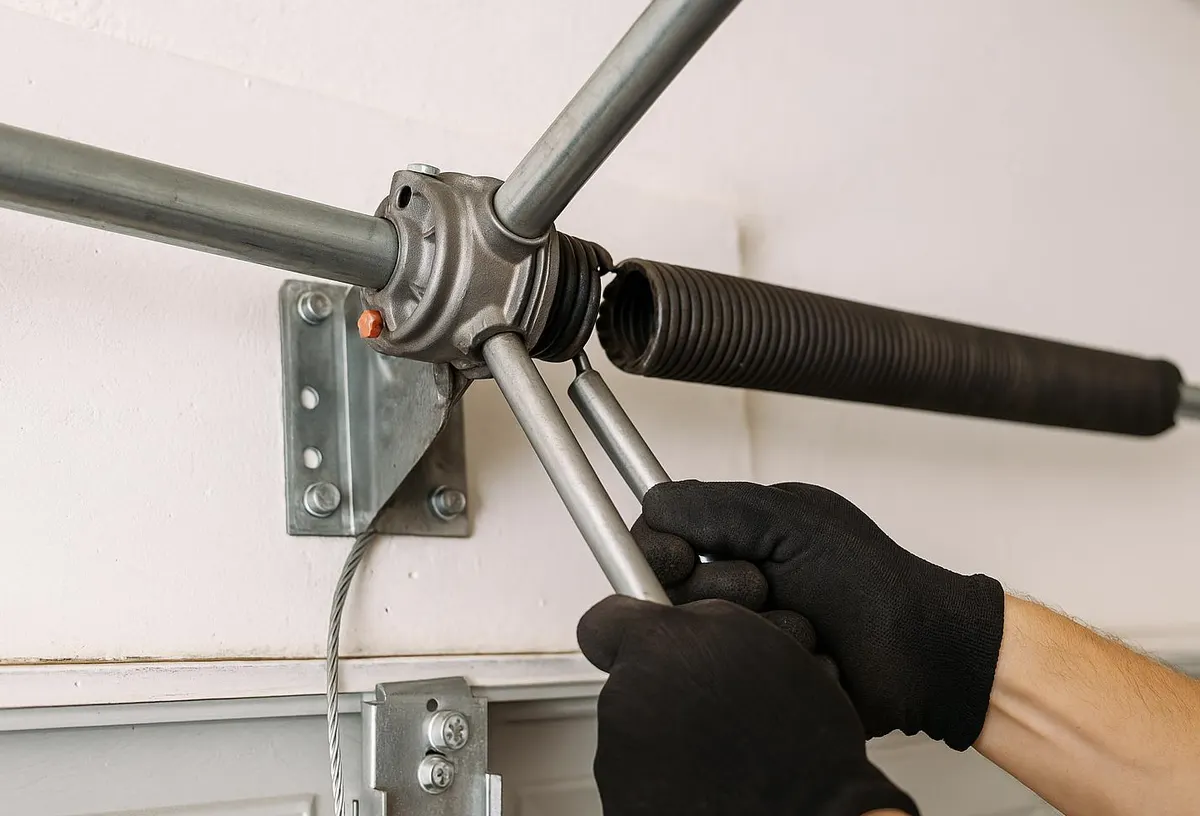
With the door closed, look at the torsion spring mounted above the door. A small, consistent gap between coils is normal. A gap that's larger in one section than the rest, or a coil that looks twisted out of line, suggests the spring is stretching unevenly and is closer to failure.
5. Inspect Extension Spring Cables
If your door uses extension springs (mounted above the horizontal tracks), check the safety cables running through them. Fraying, rust, or a cable that looks stretched tighter on one side than the other is a strong sign that spring is carrying more load than it should — and that the safety cable may be the only thing stopping it from whipping loose if it snaps.
6. Look at How the Door Closes
Stand back and watch a full close cycle. If one side of the door dips or reaches the floor before the other, one spring is weaker than its pair. This uneven strain accelerates wear on tracks, rollers, and the remaining good spring.
7. Note the Spring's Age and Cycle Count
Most residential torsion springs are rated for a set number of cycles (one cycle = one full open and close). Heavy steel doors common in Mesa homes use up that rating faster than lighter doors. If you don't know how old your springs are or when they were last replaced, treat an aging, unbalanced door as due for inspection regardless of how it looks.
When to Call Mesa Garage Door Pro
If your door fails the balance test, the opener is straining, or you spot an uneven gap or a frayed cable, don't try to adjust or replace the spring yourself — torsion springs in particular are under enough tension to cause serious injury. Mesa Garage Door Pro handles Garage Door Spring Replacement with the correct spring size and tension for your door's weight, and we can pair it with a Garage Door Maintenance & Tune-Up to re-lubricate hardware that's been baked by the summer heat and check cables, rollers, and balance at the same time.
If any of these checks gave you a concerning answer, call Mesa Garage Door Pro today — we serve Mesa, Gilbert, Tempe, Chandler, Scottsdale, Apache Junction, Queen Creek, and Gold Canyon, and we'd rather replace a tired spring now than respond to a broken one later.